
Bible Study: Isaiah/Psalm 44-45

(Together, in these Bible studies, we read one chapter a day, looking for two things: 1) Something new, and 2) The character of God. We also provide one verse a week to memorize. These are small steps into exploring, examining, and implanting God’s Word. These Bible studies are intended to help you get into the Word when you don’t know where to start, and help cultivate consistent Bible study habits. They are designed for you to be able to jump in with us at any time! Subscribe to follow along! Currently, we’re reading the books of Isaiah and Psalms together.)
OK Men,
Some very interesting prophecies in these chapters, both in Isaiah and the Psalms. What has been standing out to you as you read?
Chapter 44:
What’s New: There’s an incredible prophecy in this chapter and I almost missed it. The last verse says, “Who says of Cyrus, ‘He is my shepherd and will accomplish all that I please; he will say of Jerusalem, “Let it be rebuilt,” and of the temple, “Let its foundations be laid,”’” (v28). A man named Cyrus will rebuild Jerusalem and lay the foundations of a new temple. Why is this such a big deal? At the time Isaiah received and wrote this message from God, Cyrus wouldn’t be born for more than 100 years…and he’s mentioned by name.
Cyrus was the founder of the Persian Empire. In chapter 36 we read about the Assyrian army marching to Jerusalem and threatening Hezekiah. There would be an Assyrian takeover, then the Babylonians would rise and take some of the best and strongest Jews captive for 70 years, and finally, Cyrus would conquer the Babylonians, release the Jewish captives, and let them rebuild Jerusalem. It’s such an incredible prophecy because it doesn’t merely document the next future takeover, the takeover that’s third in line!
Who is God: “Who then is like me? Let him proclaim it. Let him declare and lay out before me what has happened since I established my ancient people, and what is yet to come - yes, let them foretell what will come,” (v7). The Lord God essentially asks, “Who can tell me what the future holds?” Since no one can, God says, “I can do that!” and then gives us this information about a man named Cyrus more than a century in advance.
Psalm 44: “It was not by their sword that they won the land, nor did their arm bring them victory; it was your right hand, your arm, and the light of your face, for you loved them,” (v3). Any good thing that we’ve done is only because of the Lord. He may have given us the talents, character, or desire to achieve great things, but ultimately, he allowed it. His face shines on us more than we even realize.
Enjoying this Bible study?
Consider a small donation through “Buy Me A Coffee” to help support OKMen Network!
Chapter 45:
What’s New: The Lord gave amazing blessings and an abundance of grace to Cyrus. He declared, “I will go before you, I will break down gates, I will give you treasures, and I will do this so that you may know that I am the Lord,” (v2-3). God goes on to say, “For the sake of Jacob my servant, of Israel my chosen, I summon you by name and bestow on you a title of honor, though you do not acknowledge me,” (v4). Not many get honor from God without acknowledging him. So, why would God do this? For the sake of saving his people. As mentioned in the previous chapter, Cyrus would conquer Babylon and let the captured Jews return to their homeland to rebuild their city and temple. Exalting an enemy and then using him to free your people is like an “inception” level of ruling!
Who is God: “I form the light and create darkness, I bring prosperity and create disaster; I, the Lord, do these things,” (v7). God creates darkness and disaster. Seems as though “mind-bending” rule extends to us as well. This is a hard verse to wrestle with. Why would God not merely allow disaster to occur, but bring it about himself? There are some answers we just don’t get answers to. I know God is all-powerful and most likely uses the disaster he brings. But why does he do it? This is the kind of question that when wrestled with, ultimately tests the depths of faith and trust.
He does give us an assurance: “But Israel will be saved by the Lord with an everlasting salvation; you will never be put to shame or disgraced, to ages everlasting,” (v17).
Psalm 45: This Psalm is described as a “wedding song”. Initially, it may seem odd that a wedding song would be included in Holy Scripture, but it makes completes sense when we remember that a marriage ceremony is what is used in other Scriptures to describe Christ’s return to claim his church, also known as “his bride”. Knowing that, the kingly references point very clearly to the Messiah. “You are the most excellent of men and your lips have been anointed with grace, since God has blessed you forever,” (v2). Read this Psalm again knowing that the king is Christ and the bride is his church (you!). It brings about a new depth.

Scripture Memorization: “I, even I am he who blots out your transgressions, for my own sake, and remembers your sins no more.” Isaiah 43:25.
Reflect on what it might mean for the Lord to blot out your transgressions for his sake.
What kind of freedom does this verse bring by committing it to memory?
OK Men - This is what I have noticed in these chapters. What’s new to you? How do you see the character of God? Leave a comment!

*If The Lord puts it on your heart to help support this mission, community, and ministry, there are a few ways you can do that:
Upgrading to a Paid Subscriber on Substack will give you access to the “Personal Reflection”, “Group Discussion”, and “Call to Action” sections of our weekly devotionals, tools that will help you dive deeper into each topic! You’ll also be supporting a network that provides Biblical material for Christian men.
Make a one-time donation at our website okmen.net or through “Buy Me a Coffee”.
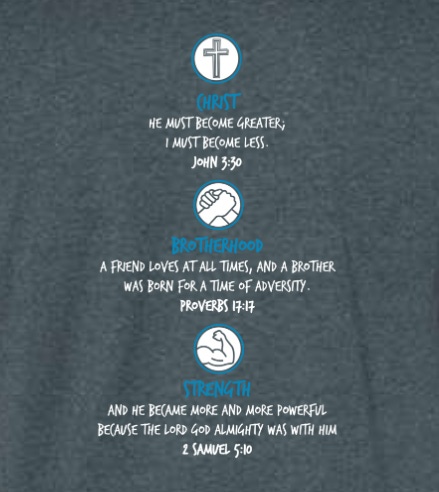
Purchase an OKMen Network T-shirt or hat! T-shirts have our three core pillars: John 3:30, Proverbs 17:17, and 2 Samuel 5:10.

Early in my walk with Jesus I can across a commentary on the book of Daniel that narrated a view of what might have happened as Cyrus marched into Babylon.
I mean, can you imagine it? This brilliant leader who has claimed victory after victory, conquers Babylon without shedding a drop of blood, and what greets him when he enters?
An old Hebrew man (Daniel) holding an ancient scroll (Isaiah) that not only mentions him by name but literally narrates his career with perfect precision.
I dare say he was probably dizzy from the implications of it.